
In this guide
→ The Mechanism: Nerve Growth Factor Stimulation→ What Human Clinical Trials Show→ Dosing: Extract vs Powder→ The Mycelium Problem→ Week 1 to Week 8: What to Expect→ Who Lion's Mane Is and Is Not For→ Cycling: Should You Take Breaks?→ Drug Interactions and Contraindications
The trail goes quiet somewhere above the treeline, the air has the particular sharpness of altitude, and you reach for your water bottle thinking about the two hours of work you still have to finish after the hike. Many people in that situation have started reaching for Lion’s Mane at some point in recent years. Whether that is justified depends on what you expect from it.
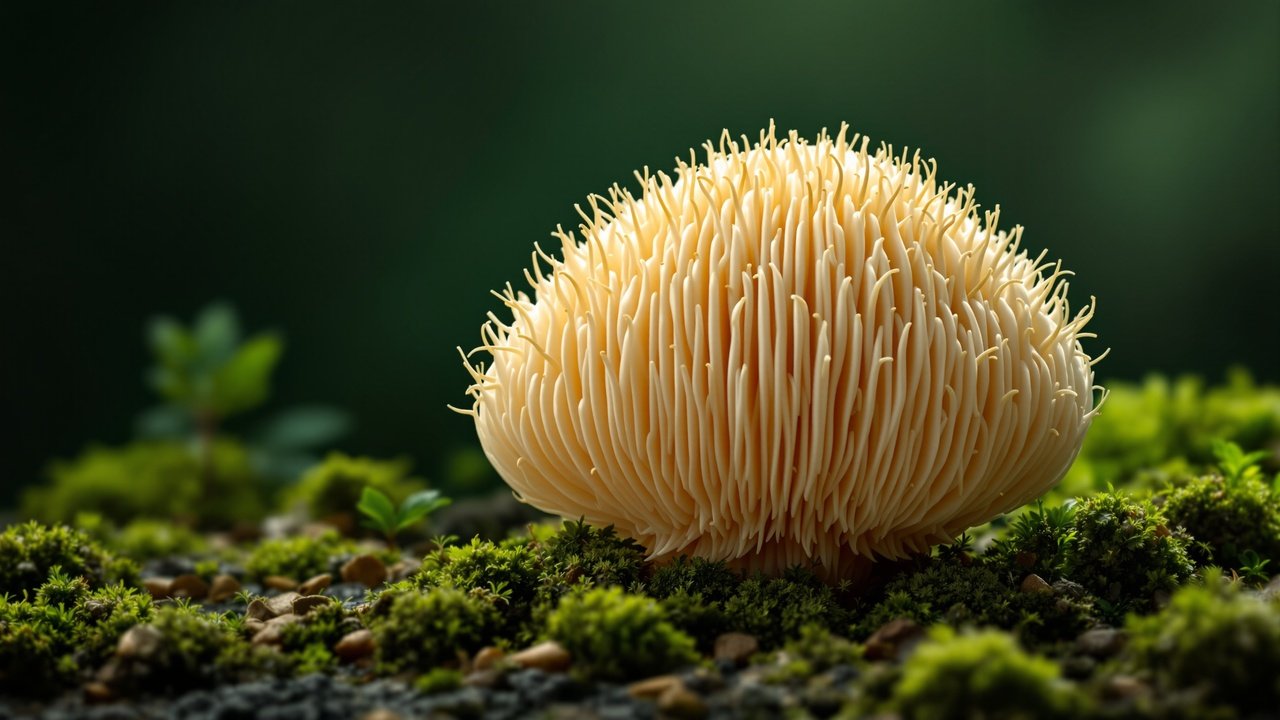
Lion’s Mane (Hericium erinaceus) is a culinary and medicinal mushroom with a genuine and reasonably well-documented mechanism of action. The question is how well that mechanism translates into practical benefits for healthy adults at realistic doses.
The Mechanism: Nerve Growth Factor Stimulation
Lion’s Mane contains two classes of bioactive compounds not found in other mushrooms: hericenones (found in the fruiting body) and erinacines (found in the mycelium). Both stimulate the production of nerve growth factor (NGF) and brain-derived neurotrophic factor (BDNF) in animal models, and erinacines cross the blood-brain barrier directly.
NGF is critical for the growth, maintenance, and survival of neurons, particularly cholinergic neurons involved in memory and learning. BDNF supports synaptic plasticity and is associated with learning consolidation and mood regulation. The theoretical basis for Lion’s Mane as a cognitive supplement is therefore solid: if it stimulates NGF and BDNF in humans as it does in rodent models, the downstream effects on cognition and mood are plausible.
The limitation of the animal research is important: oral delivery of these compounds in humans does not guarantee the same tissue concentrations observed in rodent studies. Human clinical trials matter more than the mechanism alone, which is why the research quality of the human evidence deserves scrutiny.
What Human Clinical Trials Show
Memory and cognition in older adults: The most influential human trial (Mori et al., 2009) showed significant improvements in Mini-Mental State Examination scores in adults aged 50 to 80 with mild cognitive impairment after 16 weeks of supplementation at 3 g per day. Scores declined when the supplement was stopped. This is meaningful evidence, though the population was older adults with cognitive impairment rather than healthy young adults.
Acute cognitive effects in healthy adults: A 2025 study published in Frontiers in Neuroscience found that a single dose of Lion’s Mane extract improved performance on the Stroop task (measuring cognitive control and selective attention) at 60 minutes post-ingestion. This is notable because it suggests some acute effects rather than cumulative-only benefit, though the effect size in healthy adults is modest.
Mood and stress: A 28-day randomized controlled trial in overweight adults found improvements in mood and perceived stress compared to placebo. The mechanism here may involve the gut-brain axis rather than direct NGF stimulation in the central nervous system. Lion’s Mane has prebiotic properties that influence gut microbiome composition, which has downstream effects on mood-related neurotransmitter pathways.
Anxiety and depression: A 2010 double-blind trial in menopausal women found reductions in self-reported depression and anxiety after 4 weeks. This is a small trial in a specific population; the results are consistent with the mechanism but should not be generalized broadly without independent replication in other populations.
Dosing: Extract vs Powder
Most consumer confusion about Lion’s Mane originates from the lack of standardization between products. Two products listing the same milligram amount on the label can have dramatically different concentrations of active compounds depending on the form and extraction method.
Dried fruiting body powder: 1.8 to 5 g per day. This is the range used in most successful clinical trials. Whole powder includes the full range of compounds but requires higher dosing to achieve clinical concentrations because much of the mass is structural carbohydrates with no pharmacological activity.
Dual-extract (hot water plus alcohol extraction): 500 to 1,000 mg per day. Hot water extraction captures beta-glucan polysaccharides; alcohol extraction captures hericenones. A product standardized to both is more potent per gram than whole powder. Look for the extraction ratio on the label (typically 8:1 or 10:1) and the beta-glucan percentage (a meaningful quality indicator).
The Mycelium Problem
Many Lion’s Mane products sold in the US, particularly lower-priced options, consist primarily of myceliated grain substrate: grain (often oats or rice) that has had mycelium grown on it, then dried and powdered. This material contains significant amounts of alpha-glucan starch from the grain rather than the beta-glucan polysaccharides from the actual mushroom. The active compound concentration in these products is frequently a fraction of what a genuine fruiting body extract contains.
How to identify the problem: look for a Certificate of Analysis (CoA) showing beta-glucan content. A high-quality Lion’s Mane product should show beta-glucan content above 20% and low alpha-glucan content. Products that list “mycelium” or “mycelium biomass” without a CoA confirming beta-glucan levels should be treated skeptically. The CoA should come from a third-party testing laboratory, not the manufacturer’s in-house testing.
Week 1 to Week 8: What to Expect
In the first week, most healthy adults notice little to nothing. Lion’s Mane does not produce the acute stimulant-like effects associated with caffeine or even the same-day focus effects some people report from Rhodiola. If you are expecting an immediate cognitive shift after the first dose, you will likely be disappointed.
By weeks 3 to 4 of consistent daily use, some users report improved focus under sustained cognitive load, somewhat faster word retrieval, and marginally better mood stability. The effects are subtle rather than dramatic. By weeks 8 to 12, the research suggests these effects become more consistent, and the mood-related benefits (particularly for people managing background anxiety or stress) may become more noticeable.
The honest description for a healthy 30-year-old: the improvement is comparable to consistently sleeping 30 minutes more per night, not to taking a stimulant. It is real, it is incremental, and it requires consistent supplementation over months rather than days to evaluate fairly.
Who Lion’s Mane Is and Is Not For
Lion’s Mane has the strongest evidence for older adults with mild cognitive impairment, people seeking long-term neuroprotective supplementation as a preventative measure, and people dealing with mood-related concerns where the gut-brain mechanism may be relevant. The cognitive benefit case for healthy adults under 40 with no particular cognitive concerns is the weakest part of the research; you are supplementing to maintain and support, not to dramatically enhance what is already functioning well.
Lion’s Mane is not a good fit for people expecting acute performance enhancement before a specific cognitive task (Rhodiola is better suited to that), people with mushroom allergies (which can extend to medicinal mushroom extracts), or people who want a short 30-day trial and a dramatic result. If you will discontinue the supplement at day 30 because you have not noticed a dramatic change, the research does not suggest you will have given it a fair evaluation window.
Cycling: Should You Take Breaks?
Unlike stimulants where tolerance develops rapidly, the NGF-stimulating mechanism of Lion’s Mane does not appear to cause the same kind of receptor downregulation. Most practitioners and researchers studying adaptogens and mushroom supplements do not specifically recommend cycling Lion’s Mane on strict schedules. That said, taking periodic breaks (one to two weeks off every two to three months) is a common practice among consistent users, both as a reset and to make it easier to assess whether the supplement is still providing benefit versus baseline. If you discontinue for two weeks and notice a meaningful difference in cognitive endurance or mood stability, that difference is useful evidence that the supplement was doing something for you individually.
Drug Interactions and Contraindications
Lion’s Mane has relatively few documented drug interactions compared to other supplements. The one area of concern worth checking is anticoagulant or antiplatelet medications: some evidence suggests Lion’s Mane may have mild platelet aggregation inhibitory effects, which could theoretically potentiate blood thinners. The clinical significance of this interaction at typical supplemental doses is unclear, but if you are on warfarin, aspirin therapy, or similar medications, discuss Lion’s Mane with your prescribing physician before starting.
People with tree nut or seafood allergies occasionally report cross-reactivity with medicinal mushrooms, though this is not a well-characterized or common issue. If you have known mushroom food allergies, start with a very small test dose and wait 24 to 48 hours before continuing.
Fresh vs Dried vs Extract: The Practical Tradeoffs
Fresh Lion’s Mane mushrooms are available at specialty grocery stores and farmers markets in some regions, and can be grown at home with a cultivation kit. Fresh mushrooms are culinarily versatile (commonly used as a meat substitute in stir-fries and soups) but contain much lower concentrations of the bioactive compounds than extracts. Eating fresh mushrooms is unlikely to produce the cognitive effects studied in clinical trials at any realistic portion size.
Dried whole mushroom powder sits between fresh and concentrated extract on the potency scale. It contains the full spectrum of mushroom compounds but requires larger amounts to approach clinical trial doses. The 3 to 5 gram daily doses used in research trials are achievable with whole dried powder but require a meaningful amount of material, often several large capsules per day.
Dual-extract products (hot water plus alcohol extraction, available as capsules, tinctures, or powders) offer the highest concentration of active compounds per gram. A 500 mg dual-extract capsule standardized to 30% beta-glucan delivers more pharmacologically relevant material than 3 grams of whole dried powder. For people interested in the research-backed dose-response relationship, concentrated extract is the practical choice. Gummies and convenience formats are generally lowest in actual Lion’s Mane compound concentration despite high-end marketing claims; check the beta-glucan content per serving on the label before purchasing any form.
High-quality Lion’s Mane extracts with verified beta-glucan content are available through Bakers Botanics, which provides third-party testing documentation for purity and active compound concentration.

Marko Jambrek
Licensed architect in Zagreb, 30 years of practice (sustainable design). Writes about AI tools through a lens of order and long-term value, tests before recommending.
How I vet what I recommend
The 12-point checklist behind every review on this site. Run any “best of” article through it, including mine. Twelve checks, sent once, yours to keep.
This article may contain affiliate links. We may earn a commission if you click through and make a purchase, at no extra cost to you.